A mailing list is one of the simplest ways for a business, organization, blogger, or creator to communicate directly with a group of people. Instead of contacting each person separately, the sender can distribute newsletters, announcements, educational content, product updates, or promotions to many subscribers at once.
So, What Is a Mailing List, exactly? In modern digital marketing, it usually means an organized collection of email addresses and related subscriber information used for ongoing communication. People commonly join by completing a signup form, registering for updates, or otherwise agreeing to receive messages.
Understanding how mailing lists work is useful even if you are new to email marketing. This guide explains their purpose, common types, basic operation, benefits, management, and important privacy considerations.
What Is a Mailing List?
What Is a Mailing List in its simplest form? It is a collection of contact details organized so that messages can be distributed to a defined group of recipients. Although traditional mailing lists could contain physical postal addresses, the term today commonly refers to email lists.
An email mailing list may contain more than an email address. Depending on what subscribers provide, a business might also store a name, preferences, location, signup source, or other relevant information.
Mailchimp, for example, describes an email list as a collection of addresses used to send marketing messages, promotions, or updates. Modern email platforms also distinguish between subscribed, unsubscribed, and non-subscribed contacts.
The important point is that a well-managed mailing list is not simply a random database of email addresses. For responsible email marketing, businesses should understand how contacts were collected and whether they have appropriate permission to contact them.
How Does a Mailing List Work?
Once you understand What Is a Mailing List, the next question is how information moves from a subscriber to their inbox.
The process normally begins with collecting contact details. A website might display a newsletter form asking visitors to enter their email addresses. A customer might also choose to receive marketing messages during checkout or registration.
After signup, the information is stored in an email marketing platform or another contact-management system. The sender can then create a message, select the appropriate audience, and distribute it to the relevant subscribers.
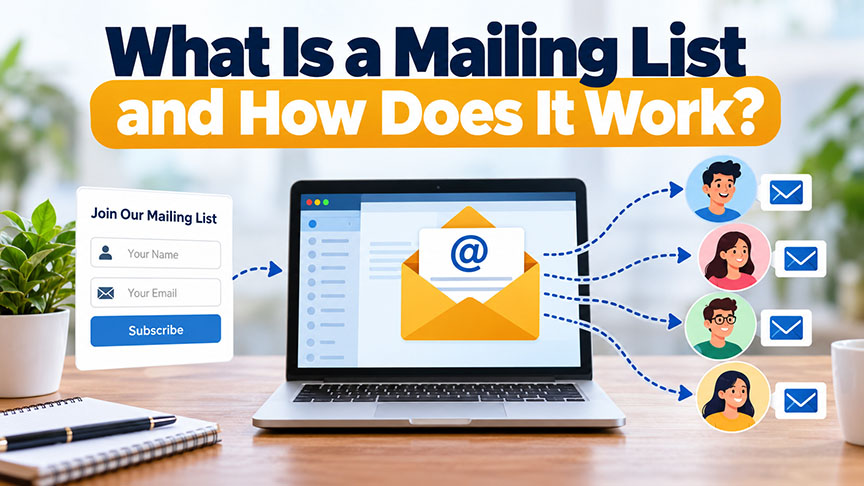
A typical process looks like this:
- A person provides an email address through a signup or registration method.
- The contact is added to the appropriate mailing list or audience.
- The sender creates an email, newsletter, announcement, or campaign.
- Contacts may be divided into segments based on relevant preferences or characteristics.
- The email platform delivers the message to the selected recipients.
- Subscribers can update preferences or unsubscribe when they no longer want the messages.
Some organizations also use automated email sequences. For example, a new subscriber might receive a welcome email immediately and useful follow-up content later.
Common Types of Mailing Lists
The answer to What Is a Mailing List can vary slightly depending on why the list exists.
Newsletter Lists
Newsletter lists are used to distribute recurring content. A blogger might send new articles, while an organization could share news, resources, or announcements.
Marketing Lists
Businesses use marketing lists to communicate information about products, services, offers, launches, and other commercial updates. The applicable rules depend on where the sender and recipients are located.
Announcement and Community Lists
Schools, associations, clubs, nonprofit organizations, and community groups may use mailing lists for event information, organizational news, schedules, and important updates.
Customer Lists
Businesses may maintain customer contact records for account or service communications. However, an important distinction exists between necessary transactional messages and promotional marketing. The UK Information Commissioner’s Office (ICO), for example, distinguishes purely administrative or customer-service messages from direct marketing messages that promote something.
Why Are Mailing Lists Useful?
When businesses ask What Is a Mailing List useful for, direct communication is usually the biggest advantage. Email allows an organization to communicate with contacts through their inboxes rather than relying entirely on social networks, search engines, or other platforms.
A mailing list can help a business distribute useful content, announce products, maintain customer relationships, invite people to events, and communicate with different audience groups.
Segmentation can make those communications more relevant. Instead of sending identical content to everyone, a business might organize subscribers according to interests, location, customer status, or the type of content they requested.
Mailing lists can also be useful outside marketing. Educational institutions, membership organizations, professional groups, and community organizations may use them to keep defined groups informed efficiently.
How to Build a Mailing List Responsibly
Learning What Is a Mailing List should also include understanding how one should be built. Collecting as many email addresses as possible is not necessarily a sound strategy.
A better approach is to give people a clear reason to subscribe. A business might offer useful newsletters, product updates, educational resources, event information, or another form of content that subscribers genuinely want.
Signup language should clearly explain what the person is agreeing to receive. Where consent is required, it should be collected appropriately and documented.
The ICO states that, under UK rules, consent for electronic marketing must be freely given, specific, informed, unambiguous, and demonstrated through a positive action. It also advises organizations to maintain records showing who consented, when, and how.
Requirements differ between jurisdictions, so businesses operating internationally should determine which privacy and electronic-marketing laws apply to their activities.
Mailing Lists, Consent, and Unsubscribing
Privacy and permission are important parts of understanding What Is a Mailing List in practice.
Rules are not identical worldwide. In the United States, the CAN-SPAM Act establishes requirements for commercial email. The Federal Trade Commission says covered commercial messages must use accurate header information and non-deceptive subject lines, include a valid physical postal address, and provide recipients with a way to opt out. Opt-out requests generally must be honored within 10 business days.
UK electronic-marketing rules differ. ICO guidance says organizations generally need consent before sending unsolicited electronic marketing to individual subscribers unless an applicable exception, such as a qualifying soft opt-in, applies.
This is why businesses should not assume that an email address found online automatically gives them permission to send marketing messages. The ICO specifically notes that publicly available contact details do not by themselves mean someone has consented to direct marketing.
Mailing List vs. Purchased Email Database
Another useful distinction when explaining What Is a Mailing List is the difference between an organically developed subscriber audience and a purchased database.
A business can build its own list by allowing interested people to register directly. Purchased lists, by contrast, contain contact information collected by another party.
Purchased data creates important permission, quality, and compliance questions. For example, ICO guidance says that when using a bought-in list for electronic marketing where consent is required, an organization needs to verify that the consent is valid and specifically covers that organization and communication method.
Building an audience directly also gives the sender better knowledge of why each subscriber joined and what information that person expects to receive.
Tips for Managing a Healthy Mailing List
Knowing What Is a Mailing List is only the beginning. List quality depends heavily on ongoing management.
Keep subscriber records organized and respect unsubscribe requests. Remove or suppress addresses that should no longer receive marketing, and avoid continuing to contact people who have opted out. Businesses should also make signup expectations clear rather than surprising subscribers with unrelated content.
Use segmentation only when it improves relevance, and avoid collecting personal information that serves no genuine purpose. Regularly reviewing inactive, invalid, or outdated contacts can also make a list easier to manage.
Most importantly, treat a mailing list as a group of real people who have expectations about how their contact information will be used.
Frequently Asked Questions
What Is a Mailing List used for?
A mailing list can be used to send newsletters, business updates, educational content, announcements, event information, promotions, and other communications to a defined group. Its exact purpose depends on the organization and why recipients joined.
Is a mailing list the same as an email list?
The terms are often used interchangeably in digital marketing. However, “mailing list” can have a broader meaning because it may also refer to lists containing physical postal addresses. An email list specifically refers to email contacts.
Do you need a website to create a mailing list?
No. A website is a convenient place to collect subscriptions, but it is not the only option. Organizations can collect appropriate signups through other channels supported by their email service, provided their collection practices comply with applicable laws and platform requirements.
Can I add any email address to my mailing list?
You should not assume that simply possessing or finding an email address gives you permission to send marketing. Applicable requirements vary by jurisdiction and circumstances. For example, UK guidance generally requires consent for unsolicited electronic marketing to individuals unless a relevant exception applies.
What information does a mailing list contain?
At minimum, an email mailing list may contain an email address. It can also contain a subscriber’s name, preferences, signup source, consent information, customer status, or other relevant data. Organizations should collect and manage personal information appropriately.
Conclusion
Understanding What Is a Mailing List comes down to recognizing its purpose: it provides an organized way to communicate with a defined audience. In email marketing, a mailing list usually consists of subscriber email addresses and relevant information used to deliver newsletters, updates, announcements, or promotional messages.
A useful list is not simply the largest collection of addresses a business can obtain. How contacts are collected, what subscribers expect, how accurately records are maintained, and whether people can exercise their privacy and opt-out rights all matter.
For businesses, bloggers, creators, and organizations, a properly managed mailing list can provide a practical channel for maintaining direct communication with people who are interested in hearing from them.
Read Also: Best Digital Planners: A Complete Guide to Choosing the Right One