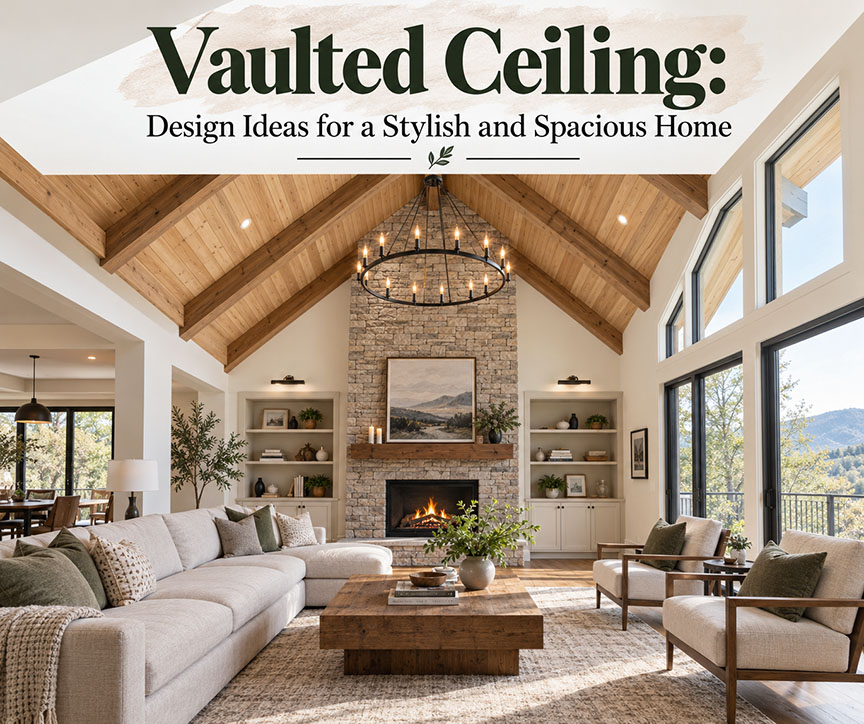
A Vaulted Ceiling can change the character of a room by drawing the eye upward and creating a stronger sense of openness. Its height and angled planes also create opportunities for dramatic lighting, exposed beams, tall windows, and statement décor. The best results, however, come from treating the ceiling as part of the entire room rather than as an isolated architectural feature.
Whether you are planning a new home, renovating an existing space, or simply looking for decorating inspiration, thoughtful choices in lighting, color, materials, and furniture can help you make the most of the extra height.
What Is a Vaulted Ceiling?
A Vaulted Ceiling is a raised ceiling that extends upward beyond the height of a conventional flat ceiling. The term covers several forms, including sloped, arched, and multi-plane designs. A cathedral ceiling is a related but more specific design, typically featuring two symmetrical slopes that follow the roofline and meet at a central ridge.
These ceilings are commonly used in living rooms, great rooms, bedrooms, kitchens, and open-plan spaces. Because they increase the vertical volume of a room, they can make even a relatively simple interior feel more architecturally distinctive.
The additional height also gives designers more freedom to work with oversized light fixtures, high-level windows, structural or decorative beams, and vertical wall treatments.
Why Vaulted Ceilings Work So Well in Interior Design
The appeal of a Vaulted Ceiling is not simply about having more space overhead. It changes how the proportions of an interior are perceived.
High ceilings can make a room feel open and visually impressive, while the sloping surfaces naturally guide attention toward architectural details. They can also provide room for larger windows or skylights where the building design allows them, helping daylight reach deeper into the interior.
There is a practical trade-off, though. More volume means lighting, heating, cooling, acoustics, and maintenance deserve careful consideration. Insulation and air sealing are particularly important because vaulted roof assemblies have less cavity space than many conventional attic designs.
Vaulted Ceiling Design Ideas Worth Considering
Add Exposed or Decorative Beams
Beams can give a Vaulted Ceiling definition and prevent a large overhead area from feeling visually empty.
Natural timber works particularly well in rustic, farmhouse, transitional, and warm contemporary interiors. Dark beams against a pale ceiling create stronger contrast, while beams finished closer to the ceiling color produce a quieter look.
Not every visible beam needs to be structural. Decorative beams can sometimes provide the desired appearance without changing the building’s load-bearing system. Any structural alterations, however, should be assessed by an appropriately qualified professional.
Use Color to Control the Sense of Scale
White, cream, and other light shades are popular for high ceilings because they reflect light and reinforce an airy atmosphere. They are not the only options.
A darker Vaulted Ceiling can create a more intimate mood in a large room, particularly when there is plenty of natural light. Wood paneling can introduce warmth and texture, while painting the ceiling and walls in closely related tones creates a more continuous appearance.
Consider the room’s proportions before choosing a dramatic finish. Strong contrast attracts attention upward, so it works best when the ceiling itself is a feature worth emphasizing.
Make Lighting Part of the Architecture
Lighting is especially important in rooms with high ceilings. A single fixture may illuminate the center while leaving walls, corners, or work surfaces poorly lit.
A layered approach is usually more effective. Pendant lights or chandeliers can occupy the vertical space, while wall lights, adjustable fixtures, and task lighting serve specific areas below.
For a kitchen with a Vaulted Ceiling, pendants can help visually connect an island or dining area to the higher architecture. In a living room, a substantial chandelier can create a focal point and bring the perceived ceiling height closer to the furniture below.
Think about maintenance as well. Bulbs and fixtures positioned at considerable height need to remain reasonably accessible.
Bring More Natural Light Into the Room
High walls provide opportunities for clerestory windows, tall glazing, and, depending on the roof design, skylights.
Natural light can emphasize the geometry of a Vaulted Ceiling, producing changing highlights and shadows throughout the day. It can also reduce reliance on artificial lighting during daylight hours when glazing is appropriately planned.
Window orientation, shading, climate, and glazing performance all matter. More glass is not automatically better; poorly considered glazing can contribute to glare and unwanted heat gain or loss. New construction and major renovations benefit from considering daylight and energy performance together.
Choose Furniture That Matches the Room’s Scale
One common decorating mistake is concentrating on the ceiling while leaving everything below it visually undersized.
Furniture does not need to be enormous, but it should have enough presence to balance the room. A generous sectional, substantial dining table, tall bookcase, large artwork, or floor-to-ceiling curtains can connect the occupied part of the room with its greater vertical scale.
In a Vaulted Ceiling living room, grouping furniture around a clear focal point—such as a fireplace, large window, or conversation area—also helps make an expansive space feel comfortable rather than empty.
Avoid filling every high wall simply because space is available. Negative space can be an important part of the design.
Combine Materials for More Visual Interest
Large ceiling surfaces offer an opportunity to introduce texture without cluttering the main living area.
Wood planks can add warmth, while painted drywall creates a clean backdrop for modern interiors. Beams, tongue-and-groove boards, and carefully selected architectural detailing can highlight the ceiling’s geometry.
Try to repeat at least one ceiling material or tone elsewhere in the room. For example, timber overhead might be echoed in flooring, shelving, furniture, or smaller decorative elements. This creates visual continuity rather than making the ceiling look disconnected.
Consider Comfort and Energy Performance
A Vaulted Ceiling should be planned as a building-envelope feature as well as an aesthetic one. Because the roof and interior ceiling may be relatively close together, there can be limited space for insulation compared with a conventional attic.
The appropriate roof assembly depends on climate, building codes, materials, and whether the roof is designed as vented or unvented. Air sealing and moisture management also need proper attention. For renovation projects, these details are best evaluated before adding finishes that make the roof cavity harder to access.
Ceiling fans can help with comfort and air circulation in suitable rooms. Tall or angled ceilings may require an extended downrod and a mounting system designed for sloped surfaces. Fan size and mounting height should be selected for the room rather than chosen for appearance alone.
Common Design Mistakes to Avoid
A successful Vaulted Ceiling interior depends on proportion and planning. Common problems include installing light fixtures that are too small, ignoring the large wall surfaces created by the extra height, or using furniture that looks lost within the room.
Other issues are more practical. Difficult-to-reach lighting, inadequate insulation, poorly planned ventilation, and inaccessible windows can become frustrating after the room is finished.
Plan both the visual design and ongoing maintenance before committing to fixtures, finishes, or architectural modifications.
Frequently Asked Questions
Does a vaulted ceiling make a room look bigger?
Generally, yes. The additional vertical space can make a room feel more open and spacious even when its floor area remains unchanged. The effect is particularly noticeable when light colors, tall windows, and appropriately scaled furniture reinforce the vertical proportions.
What type of lighting works best with high ceilings?
Layered lighting is usually the most flexible solution. Chandeliers and pendants can fill vertical space, while wall, accent, and task lighting provide illumination closer to where it is needed.
Can you install a ceiling fan on a sloped ceiling?
Yes, many ceiling fans can be installed on angled ceilings using compatible sloped mounting hardware. High ceilings may also require a longer downrod. Always follow the fan manufacturer’s specifications and ensure the electrical box and mounting system are suitable for supporting a fan.
Are vaulted ceilings difficult to insulate?
They can require more careful planning because space between the interior ceiling and roof deck may be limited. The correct insulation, air-sealing, ventilation, and moisture-control strategy depends on the roof assembly and local climate.
What colors work well on high ceilings?
Light neutrals are versatile because they help maintain a bright, open appearance. Darker shades can create contrast and drama, while natural wood adds warmth. The best choice depends on natural light, room size, furnishings, and the atmosphere you want to create.
Conclusion
A Vaulted Ceiling works best when its impressive height is balanced with the rest of the interior. Lighting, beams, windows, furniture, colors, and materials should work together so the room feels intentional rather than simply tall.
For new construction or renovation, practical details deserve equal attention. Proper insulation, air sealing, moisture management, fixture access, and comfortable air circulation can make the architectural feature easier to live with over the long term. With those fundamentals in place, the extra height becomes a valuable canvas for creating a bright, distinctive, and well-proportioned home.